May. 15, 2026
As the global energy transition accelerates, solar power is no longer limited to traditional rooftop panels. Architects, developers, and homeowners are increasingly looking for cleaner, more integrated energy solutions that can blend naturally into modern buildings. This shift has brought BIPV into the spotlight.
When discussing BIPV VS ordinary distributed PV, many people assume the difference is mainly about appearance. While aesthetics are certainly part of the conversation, the real distinction goes much deeper. The biggest difference is that ordinary distributed photovoltaic systems are attached to a building, while BIPV becomes part of the building itself.
This seemingly simple distinction changes the entire logic of how solar systems are designed, installed, and used.
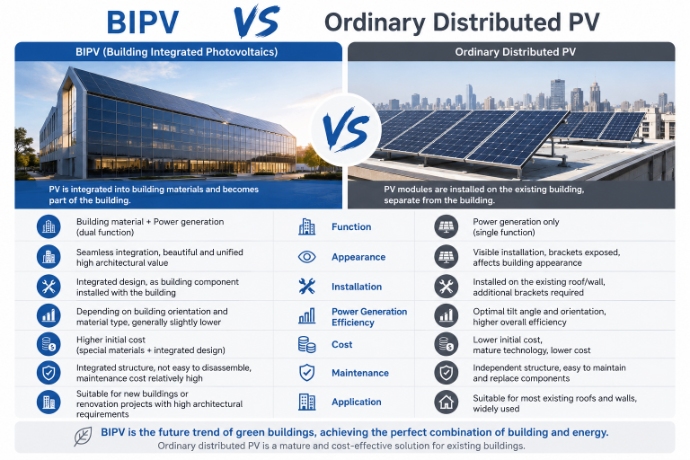
BIPV, or Building Integrated Photovoltaics, refers to photovoltaic materials that are integrated directly into a building’s structure. Instead of installing solar panels on top of an existing roof, BIPV products replace traditional construction materials while simultaneously generating electricity.
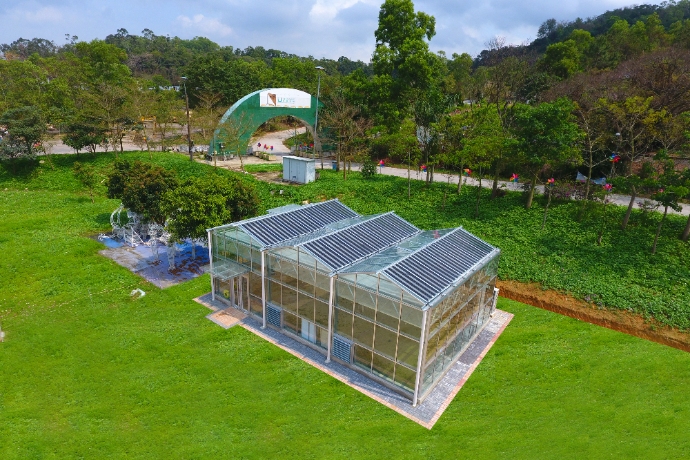
In modern architecture, BIPV can be integrated into roofs, facades, curtain walls, skylights, and even sunshading systems. A solar roof tile, for example, does not simply sit above the roof like a conventional panel—it functions as the roof itself.
This is why BIPV is often described as a fusion of architecture and renewable energy technology.
By comparison, ordinary distributed photovoltaic systems operate differently. Traditional distributed PV systems are usually mounted onto completed buildings using brackets and rails. The roof underneath remains the actual waterproof and structural layer, while the solar system acts as an external addition.
This distinction forms the foundation of the entire BIPV VS ordinary distributed PV discussion.
The biggest difference between BIPV and ordinary distributed photovoltaic systems lies in integration.
Ordinary distributed PV systems are designed primarily for power generation. The building and the photovoltaic system remain relatively independent from one another. Solar panels are added after construction, and their role is mainly to produce electricity.
BIPV, however, combines two functions into one product. It serves as both a building material and an energy generation system. In a BIPV project, the photovoltaic component is no longer an accessory—it becomes part of the architectural design from the beginning.
This changes not only the appearance of the building, but also the planning process, construction methods, and long-term value of the property.
One of the main reasons BIPV has attracted so much attention is its architectural appeal.
Traditional rooftop solar systems are highly visible. Panels are usually raised above the roof surface, and mounting structures can create a bulky appearance. For industrial buildings, this may not be a major concern, but for modern residential and commercial projects, aesthetics matter more than ever.
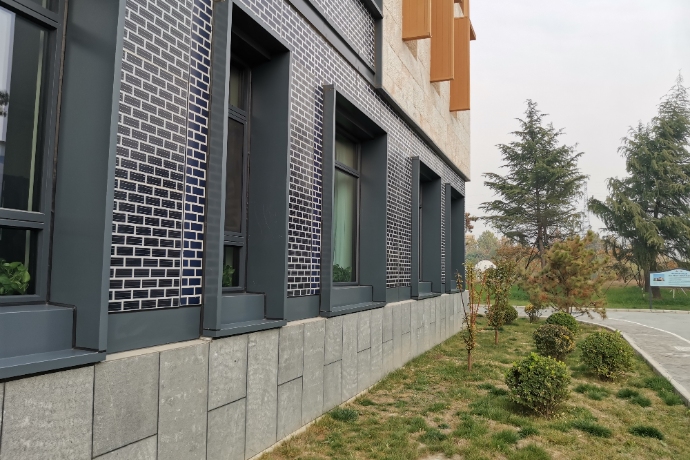
A well-designed BIPV system creates a much cleaner visual effect. Solar roof tiles can resemble slate, ceramic, or metal roofing materials, while photovoltaic curtain walls can blend seamlessly into modern glass facades. Instead of looking like equipment attached to a building, BIPV systems appear as a natural extension of the architecture.
This is one of the key reasons why conversations around BIPV VS ordinary distributed PV continue to grow in high-end construction markets.
The differences between BIPV and traditional distributed PV are not purely visual. Functionally, they operate in very different ways.
A conventional distributed photovoltaic system focuses on one primary task: generating electricity. The roof underneath still performs all structural and waterproofing functions.
A BIPV system, on the other hand, performs multiple tasks simultaneously. A photovoltaic roof tile protects the building from rain, wind, and external weather conditions while also generating solar energy. In facade applications, BIPV panels can even contribute to thermal insulation and daylight management.
Because of this dual-purpose functionality, BIPV is often viewed as a more advanced approach to sustainable building design.
Another major point in the BIPV VS ordinary distributed PV comparison is the installation process.
Traditional distributed photovoltaic systems are relatively straightforward to retrofit onto existing buildings. This is one reason why they remain extremely popular for factories, warehouses, and residential rooftops. Installation can often be completed quickly without major structural modifications.
BIPV, however, requires much earlier planning. Since the photovoltaic products become part of the building envelope, architects and engineers must consider solar integration during the initial design phase.
This means BIPV is especially suitable for:
· New construction projects
· Large-scale renovations
· Green building developments
· Smart city infrastructure
The installation process is more complex, but it also allows for a much higher degree of integration and customization.
Cost is often one of the first concerns when comparing BIPV VS ordinary distributed PV systems.
In most cases, traditional distributed PV systems have lower upfront costs. The technology is standardized, installation processes are mature, and the supply chain is highly developed.
BIPV systems usually require:
· Customized engineering
· Specialized installation
· Higher-end building materials
· Greater design coordination
As a result, initial investment is often higher.
However, evaluating BIPV purely based on upfront cost can be misleading. Since BIPV products replace conventional building materials, part of the construction cost is effectively absorbed into the photovoltaic system itself.
Over the long term, BIPV may also provide additional value through:
· Improved architectural aesthetics
· Increased property value
· Reduced material redundancy
· Enhanced sustainability certifications
This long-term perspective is becoming increasingly important in modern real estate development.
One challenge with traditional rooftop solar systems is the mismatch between the lifespan of the roof and the solar panels.
In many buildings, the roof may require repair or replacement before the photovoltaic system reaches the end of its operational life. This can lead to additional labor costs because panels often need to be removed and reinstalled during roof maintenance.
A properly designed BIPV system solves much of this problem by aligning the photovoltaic system with the lifecycle of the building envelope itself.
This integrated approach simplifies maintenance planning and creates a more cohesive long-term solution.
The rapid growth of BIPV is closely connected to broader trends in architecture and urban development.
Governments worldwide are promoting:
· Low-carbon construction
· Net-zero energy buildings
· Sustainable urban infrastructure
At the same time, property owners increasingly want renewable energy systems that do not compromise the appearance of their buildings.
Traditional rooftop panels helped popularize solar energy, but many developers now see BIPV as the next stage of solar evolution.
In dense urban environments where roof space is limited, integrating photovoltaics directly into facades and building surfaces also creates new opportunities for energy generation.
Because of these advantages, the conversation around BIPV VS ordinary distributed PV is becoming more relevant every year.
There is no single answer that applies to every project.
Traditional distributed photovoltaic systems still offer important advantages, particularly for retrofit applications where cost efficiency and fast installation are priorities.
However, BIPV provides a fundamentally different value proposition. It is not simply about generating electricity—it is about integrating renewable energy into the architecture itself.
For projects where design, sustainability, and long-term building performance matter, BIPV is often the more future-oriented solution.
As photovoltaic technology continues to improve, BIPV is expected to play a much larger role in the global construction industry.
Manufacturers are already developing:
· Higher-efficiency photovoltaic materials
· More customizable solar building products
· Lightweight integrated solar systems
· Smart energy management solutions
Over time, the cost gap between BIPV and ordinary distributed PV is also expected to narrow.
Many industry experts believe that future buildings will no longer treat solar power as optional equipment. Instead, energy generation will become a standard part of the building envelope itself.
That vision represents the true potential of BIPV.
The biggest difference between BIPV VS ordinary distributed PV is integration.
Ordinary distributed photovoltaic systems are installed onto buildings, while BIPV transforms the building itself into an energy-generating structure.
This changes the relationship between architecture and renewable energy in a profound way. Instead of viewing solar technology as external equipment, BIPV treats solar power as an essential building component.
As sustainability, aesthetics, and energy efficiency become increasingly important in modern construction, BIPV is emerging as one of the most important directions for the future of solar energy.