Mar. 24, 2026
A solar PV module uses interconnected photovoltaic cells to convert sunlight into DC electricity.
Its main components include tempered glass, encapsulant, solar cells, a backsheet or rear glass, a frame, a junction box, and bypass diodes.
Common module types include monocrystalline, polycrystalline,thin-film, bifacial, glass-glass, flexible, and BIPV modules.
Module performance is affected by sunlight, temperature, shading, orientation, surface contamination, system design, and degradation.
Module selection should consider efficiency, dimensions, electrical compatibility, structural requirements, warranty, installation conditions, and architectural needs.
As countries accelerate the transition toward clean energy, the solar PV module has become one of the most important technologies in the renewable energy sector. A solar PV module converts sunlight into electricity using photovoltaic cells, allowing homes, businesses, and large solar farms to generate power without fossil fuels. Because of its reliability and scalability, the solar PV module is now widely used in residential rooftops, commercial buildings, and utility-scale solar power plants.
In simple terms, a solar PV module is the building block of any photovoltaic system. When many solar PV modules are connected together, they form a solar array capable of producing significant amounts of electricity. Understanding how a solar PV module works helps explain why solar energy has become one of the fastest-growing sources of power worldwide.
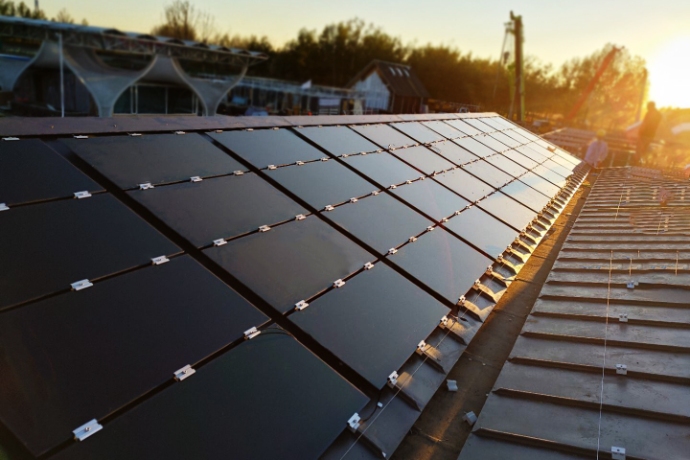
A solar PV module is an assembly of multiple photovoltaic cells that convert sunlight into direct current (DC) electricity. These cells are usually made from crystalline silicon and are electrically connected and encapsulated within protective layers of glass and polymer materials.
A typical solar PV module consists of several key components:
Photovoltaic cells that generate electricity from sunlight
Tempered glass that protects the cells from weather and impact
Encapsulant layers that hold the cells in place and prevent moisture damage
Backsheet that provides insulation and structural protection
Aluminum frame that strengthens the solar PV module and allows mounting
Junction box that connects the solar PV module to the electrical system
Because of this layered structure, the solar PV module is durable enough to operate outdoors for more than 25 years. Modern solar PV modules are designed to withstand wind, snow loads, temperature variations, and long-term ultraviolet exposure.
The operation of a solar PV module is based on the photovoltaic effect, a process in which certain semiconductor materials generate electricity when exposed to sunlight.
When sunlight hits a solar PV module, photons from the light strike the silicon cells inside the module. This energy excites electrons within the semiconductor material, allowing them to move freely. As electrons flow through the electrical circuit of the solar PV module, direct current electricity is generated.
To visualize the fundamental physics involved, the photovoltaic process relies on energy transfer from light to electrons in semiconductor materials.
Although the internal semiconductor physics is complex, the practical outcome is simple: each solar PV module continuously converts solar radiation into usable electrical power during daylight hours.
Because a single solar PV module produces a limited amount of power, multiple modules are connected together to increase system output. In a typical residential installation, 10–30 solar PV modules may be installed on a rooftop, while large solar farms may contain hundreds of thousands of solar PV modules.
Solar PV Module Working Principle in Four Steps
1.Solar cells absorb photons from sunlight.
2.The absorbed energy causes electrons in the semiconductor material to move.
3.The movement of electrons generates direct current electricity.
4.An inverter converts DC electricity into AC electricity for practical use.
Different technologies are used to manufacture a solar PV module, and each type offers different performance characteristics.
Monocrystalline Solar PV Module
A monocrystalline solar PV module is made from single-crystal silicon wafers. This type of solar PV module is known for high efficiency and long service life. Because the silicon structure is highly uniform, a monocrystalline solar PV module can achieve efficiency levels exceeding 20%.
Polycrystalline Solar PV Module
A polycrystalline solar PV module is produced using multiple silicon crystals melted together. This type of solar PV module is generally more affordable but slightly less efficient than monocrystalline designs.
Thin-Film Solar PV Module
A thin-film solar PV module uses semiconductor layers deposited onto substrates such as glass or metal. While thin-film solar PV modules may have lower efficiency, they offer advantages such as lightweight construction and flexible applications.
Each type of solar PV module is used in different environments depending on cost, efficiency requirements, and installation conditions.
Today, the solar PV module is used in a wide range of energy applications around the world.
Residential Solar Systems
Homeowners install solar PV modules on rooftops to generate electricity for household consumption. A residential solar PV module system can reduce electricity bills and increase energy independence.
Commercial and Industrial Buildings
Businesses increasingly install solar PV modules on factory roofs, warehouses, and office buildings. In commercial applications, a large solar PV module array can offset a significant portion of electricity demand.
Utility-Scale Solar Farms
Large power plants use thousands or even millions of solar PV modules to generate electricity for national power grids. In these installations, the solar PV module becomes a critical component of large-scale renewable energy infrastructure.
Off-Grid and Remote Power
A solar PV module is also widely used in remote areas where traditional power grids are unavailable. Telecommunications stations, rural homes, and monitoring equipment often rely on solar PV modules combined with battery storage.
The growing popularity of the solar PV module is driven by several major advantages.
Clean energy generation:
A solar PV module produces electricity without emitting greenhouse gases or air pollutants.
Long operational lifespan:
Most solar PV modules are designed to operate for 25–30 years with minimal performance degradation.
Low maintenance:
A solar PV module requires relatively little maintenance beyond occasional cleaning and inspection.
Scalability:
Because solar PV modules are modular by design, systems can be easily expanded by adding additional modules.
Energy cost reduction:
As manufacturing costs continue to fall, installing a solar PV module system can significantly reduce electricity expenses over time.
Innovation in solar PV module design continues to improve efficiency, durability, and sustainability. Researchers and manufacturers are currently focusing on several emerging trends.
High-efficiency cell architectures such as TOPCon and heterojunction technologies are increasing the performance of the modern solar PV module.
Bifacial solar PV modules are designed to capture sunlight from both sides, increasing energy generation in reflective environments.
Building-integrated photovoltaics (BIPV) incorporate the solar PV module directly into roofs, façades, and building materials.
Recycling technologies are also improving, ensuring that the materials in a solar PV module can be recovered and reused when the product reaches the end of its lifecycle.
These innovations will make the next generation of solar PV modules even more efficient and environmentally sustainable.
The solar PV module is the fundamental component of modern solar energy systems. By converting sunlight directly into electricity, the solar PV module enables clean, renewable power generation at both small and large scales. From residential rooftops to massive solar farms, the solar PV module plays a central role in the global shift toward sustainable energy.
As technology continues to advance, the performance and affordability of the solar PV module will keep improving. With increasing demand for renewable power worldwide, the solar PV module is expected to remain a cornerstone of the future energy landscape.
Q: What is the difference between a solar PV module and a solar panel?
A: A solar PV module is typically a single unit containing multiple photovoltaic cells, while the term solar panel is often used interchangeably but may refer to one or several connected modules.
Q: How long does a solar PV module last?
A: Most solar PV modules are designed to operate for 25–30 years, with manufacturers usually providing performance warranties guaranteeing at least 80–85% output after 25 years.With proper installation and minimal maintenance, a solar PV module can continue generating electricity for decades.
Q: How many cells are in a solar PV module?
A: The number of cells in a solar PV module depends on the module design. Traditional solar PV modules commonly contain 60 or 72 photovoltaic cells, while newer high-efficiency designs may include 120 or 144 half-cut cells. Increasing the number of cells can improve the power output and efficiency of the solar PV module.
Q: Can a solar PV module work on cloudy days?
A: Yes, a solar PV module can still generate electricity on cloudy days. Although the output will be lower than on sunny days, photovoltaic cells can capture diffuse sunlight that passes through clouds. Modern solar PV modules are designed to continue producing power even under partially shaded or low-light conditions.