Mar. 17, 2026
As the global transition toward renewable energy accelerates, solar power has become one of the fastest-growing sources of electricity. Millions of photovoltaic systems are installed every year, leading many industry observers to ask an increasingly important question: can PV modules be recycled once they reach the end of their service life? In short, the answer is yes—PV modules can be recycled, and recycling technologies are developing rapidly. However, the scale, efficiency, and infrastructure of PV module recycling still vary across regions.
Understanding can PV modules be recycled is essential as the first generation of large-scale solar installations approaches the end of their 25–30 year lifecycle. Governments, manufacturers, and recycling companies are now investing heavily in solutions that make photovoltaic recycling both economically viable and environmentally beneficial.
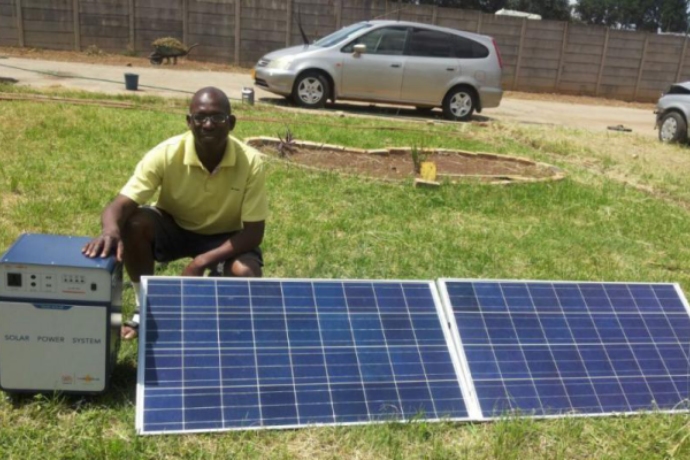
Solar panels are widely recognized as a clean energy technology, but sustainability also depends on how equipment is managed after decades of operation. This is why the industry is paying increasing attention to the question: can PV modules be recycled at scale.
A typical PV module contains valuable materials such as:
Aluminum frames
Silicon solar cells
Copper wiring
Silver paste
Polymer encapsulants
Because these materials have significant economic value, the answer to “can PV modules be recycled” is not just environmental—it is also financial. Recycling allows manufacturers to recover raw materials and reduce reliance on mining and resource extraction.
According to industry projections, global solar waste could exceed 70 million tons by 2050. Addressing the question “can PV modules be recycled” is therefore critical to ensuring that solar power remains a truly sustainable energy solution.
To fully understand can PV modules be recycled, it is important to look at the recycling process itself. Modern recycling technologies are capable of recovering a high percentage of materials from end-of-life panels.
The typical recycling process involves several stages:
Old or damaged solar panels are first collected from solar farms, rooftops, or decommissioned installations. When discussing can PV modules be recycled, logistics plays a key role because panels must be transported safely to recycling facilities.
Recycling facilities remove the aluminum frame and junction box. These components can be reused directly. This step already demonstrates that PV modules can be recycled effectively since aluminum recovery rates can exceed 95%.
To separate the encapsulant layers (usually EVA) from the solar cells and glass, recycling plants use thermal or chemical treatments. At this stage, the process confirms again that PV modules can be recycled because glass and silicon can be isolated for further recovery.
Recovered materials include:
Glass for new solar panels or construction materials
Silicon for new photovoltaic cells
Silver and copper for electronics manufacturing
Through these processes, it becomes clear that the answer to can PV modules be recycled is technically yes, with recovery rates reaching 80–95% of total material weight depending on the technology used.
Government regulations are playing an important role in reinforcing the answer to can PV modules be recycled. Several regions have already established frameworks to manage solar panel waste.
The European Union includes photovoltaic panels under the Waste Electrical and Electronic Equipment (WEEE) directive. This regulation requires manufacturers to finance the collection and recycling of panels, reinforcing the principle that PV modules can be recycled responsibly.
While national regulation is still developing, several states are exploring legislation around solar panel recycling. Research institutions are also studying advanced processes to ensure that PV modules can be recycled more efficiently.
Countries with large solar manufacturing sectors are also investing in recycling infrastructure. China, Japan, and South Korea are researching technologies to prove at industrial scale that PV modules can be recycled economically.
The conversation around can PV modules be recycled is increasingly shifting toward economic opportunity. Analysts estimate that the global market for solar panel recycling could exceed $2 billion by 2030.
Recycling companies can recover valuable materials including:
High-purity silicon
Silver used in cell contacts
Aluminum frames
High-quality glass
As the industry matures, confirming that PV modules can be recycled opens the door for a circular economy in the solar sector. Manufacturers may eventually integrate recycled materials directly into new module production.
Despite the clear answer to that question - PV modules can be recycled, several challenges remain.
Limited Recycling Infrastructure
Many countries still lack specialized recycling facilities for photovoltaic modules. Even though PV modules can be recycled, transportation costs and facility availability can limit large-scale recycling.
Complex Module Design
Modern solar panels contain laminated materials that are difficult to separate. This complexity sometimes raises the question again: can PV modules be recycled efficiently without expensive processing?
Economic Viability
In some cases, the cost of recycling may exceed the value of recovered materials. Improving technology and large-scale operations will help ensure that PV modules can be recycled profitably.
The future of solar energy depends partly on solving the challenge of being able to recycle PV modules more efficiently. Several promising innovations are emerging:
Laser-based separation technologies
Low-temperature chemical recycling
Automated robotic dismantling
Closed-loop manufacturing systems
These technologies aim to make recycling cheaper, faster, and capable of recovering even more materials. As these solutions develop, there is a growing consensus in the industry that photovoltaic modules can be recycled as part of a sustainable solar energy lifecycle.
Whether photovoltaic modules can be recycled is no longer a theoretical issue. Technically and practically, PV modules can be recycled, and the technologies to do so are improving rapidly. With growing solar deployment worldwide, recycling will become an essential component of the renewable energy ecosystem.
Governments, manufacturers, and recycling companies are now collaborating to expand infrastructure, improve material recovery rates, and reduce costs. As a result, the industry is moving toward a circular solar economy where PV modules can be recycled, reused, and reintegrated into future photovoltaic production.
Ultimately, the ability to answer can PV modules be recycled with confidence strengthens the long-term sustainability of solar power and ensures that renewable energy remains both environmentally responsible and economically viable.