Dec. 15, 2025
As solar technology continues to advance, solar module glass has become one of the most critical components determining the performance, durability, and long-term reliability of photovoltaic (PV) modules. This guide provides a comprehensive overview of what solar module glass is, how it works, how it is manufactured, what performance standards it must meet, and how users can evaluate different solar module glass options for their projects.
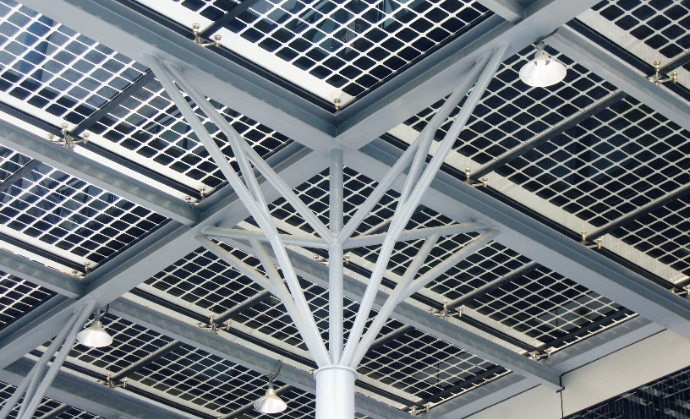
Solar module glass is a specialized engineered glass used as the front protective layer of photovoltaic panels. Its primary purpose is to:
Protect solar cells from external mechanical and environmental damage
Allow maximum sunlight to pass through with minimal reflection
Withstand long-term outdoor exposure, including UV radiation, humidity, extreme temperatures, and chemical corrosion
Maintain structural integrity for 25–30 years or more
Because solar module glass governs both protection and light transmission, its quality directly impacts module efficiency, lifespan, and field performance.
The functionality of solar module glass goes far beyond simple mechanical protection. Its contribution spans across optical, mechanical, and electrical safety domains:
Optical performance: High transmittance and anti-reflective coatings help solar cells absorb more light.
Mechanical resistance: Tempered solar module glass can withstand wind loads, snow pressure, and hail impact.
Weather durability: The glass resists humidity, dust, salt mist, UV degradation, and thermal cycling.
Electrical safety: As part of the laminated structure, solar module glass ensures insulation and prevents electrical leakage.
High-quality solar module glass can improve power output by 2%–3% simply through improved transmittance and surface treatment.
Modern solar module glass is most commonly produced using:
This is the industry standard for solar modules. Low iron content increases solar transmittance, ensuring more sunlight reaches the cells.
During manufacturing, molten glass is passed through rollers that imprint a textured pattern, improving optical scattering and minimizing reflection.
Tempering strengthens solar module glass, increasing mechanical stability by 3–5 times and ensuring safe breakage behavior (shattering into small, blunt fragments).
Nano-coatings applied to solar module glass reduce surface reflection and significantly increase light absorption, especially under diffuse or low-angle sunlight.
The most commonly used type across standard rooftop and utility-scale solar modules. Provides strong mechanical properties and high impact resistance.
Designed to optimize light diffusion and enhance cell absorption; widely used in monofacial modules.
In bifacial modules, solar module glass is applied to both the front and rear:
Increases module rigidity
Extends lifespan to 30 years or more
Improves rear-side energy yield
Enhances protection in harsh environments
Used in lightweight, flexible, or building-integrated photovoltaic (BIPV) systems. Provides a balance between durability and weight reduction.
To choose the right solar module glass, users should understand several critical performance indicators:
Measured as the amount of sunlight that passes through the glass. Industry standards require a minimum of 91%–92%, while premium AR-coated solar module glass can reach 94% or higher.
Includes wind load, snow load, and hail resistance testing. Tempered solar module glass is essential for areas with extreme weather.
High-quality coatings remain effective for decades despite exposure to UV radiation, sand abrasion, and chemical pollutants.
Solar module glass must endure temperature ranges from −40°C to +85°C during IEC reliability tests.
Glass quality can influence the module’s Potential-Induced Degradation (PID) performance, making it an important safety and reliability factor.
Solar module glass must comply with multiple international standards, including:
IEC 61215 – Module design qualification and type approval
IEC 61730 – Module safety and construction requirements
IEC 60664 – Insulation coordination for electrical systems
EN 12150 / EN 1863 – Tempered and heat-strengthened glass standards
UL 61730 – Safety certification for the North American market
These certifications ensure solar module glass can withstand real-world environmental stress over decades of operation.
Solar module glass is used across diverse PV applications:
Residential rooftop systems
Commercial and industrial solar installations
Utility-scale solar farms
BIPV façade and rooftop systems
Agriculture-PV (Agri-PV)
Floating solar systems
Off-grid and portable solar solutions
Each application may require different thicknesses, coatings, or glass configurations.
When selecting solar module glass, consider:
Project environment
High-wind, snowy, coastal, or desert environments require stronger and more durable glass.
Desired module performance
AR-coated glass or bifacial double-glass upgrades can enhance overall energy yield.
Longevity requirements
For BIPV or utility-scale projects, double-glass modules offer superior lifespan.
Weight constraints
Rooftop and lightweight applications may benefit from thinner solar module glass.
Cost performance
Evaluate the cost-to-benefit ratio of coating technologies, thickness options, and advanced glass types.
The solar module glass industry is evolving rapidly with innovations including:
Anti-soiling coatings for reduced maintenance
Bifacial-optimized ultra-clear glass
Larger format glass for next-generation high-power modules
Lightweight but high-strength glass composites
Colored or semi-transparent glass for BIPV aesthetics
These advancements continue to improve overall module efficiency and expand solar deployment scenarios.
As a core component of modern PV systems, solar module glass defines the safety, reliability, and optical performance of solar modules. By understanding the structure, types, and technical specifications of solar module glass, users can make informed decisions that lead to higher energy yields, longer system lifespans, and greater return on investment.
Whether for residential installations, commercial rooftops, or large-scale solar farms, selecting high-quality solar module glass is essential for building a durable and efficient solar energy system.