Oct. 14, 2026
For commercial building owners and developers, solar energy is no longer limited to rooftop installations. Office towers, shopping centers, hotels, and public buildings are increasingly exploring solar facades as another way to generate electricity without requiring additional land.
But does a solar facade offer better value than a conventional rooftop solar system?
Recent research suggests that the answer depends on more than electricity generation alone. While rooftop panels generally deliver higher annual energy output per square meter, solar facades can make use of vertical building surfaces and potentially replace conventional exterior materials. This makes building-integrated photovoltaic (BIPV) solutions particularly relevant to commercial projects where energy performance and architectural design must be considered together.
Rooftop solar systems typically use photovoltaic panels installed above an existing roof. Their orientation and tilt can often be adjusted to maximize solar exposure, making them a practical choice for warehouses, factories, supermarkets, and other buildings with large roof areas.
Solar facades, by contrast, integrate photovoltaic modules into exterior walls, curtain walls, or building cladding. In a BIPV system, these modules can function as both electricity-generating equipment and part of the building envelope.
The distinction becomes important when evaluating project costs and design requirements.
Comparison | Solar Facades | Rooftop Solar |
Installation location | Exterior walls and curtain walls | Roof surfaces |
Energy generation | Depends heavily on facade orientation and shading | Generally higher annual yield per square meter under favorable conditions |
Available surface | Can utilize large vertical areas | Limited by usable roof space |
Building integration | Can replace facade materials | Usually mounted above existing roofing |
Architectural flexibility | Custom colors, patterns and glazing options | More limited integration with building appearance |
Initial investment | Often higher engineering and installation complexity | Typically more straightforward |
Best applications | Offices, high-rise buildings, commercial landmarks | Warehouses, factories, retail centers |
Neither approach is universally better. The most suitable system depends on the building's geometry, solar exposure, construction requirements, and energy consumption.
Rooftop solar generally has an advantage in annual electricity generation because panels can be positioned at favorable angles to capture sunlight.
Vertical solar facades receive sunlight differently throughout the day. Their performance depends on the building's orientation, surrounding structures, geographic location, and seasonal solar conditions.
However, recent research suggests that vertical BIPV may be more competitive than commonly assumed.
In August 2026, the IEA Photovoltaic Power Systems Programme (IEA PVPS) published findings from a study evaluating 357 BIPV design configurations across 44 cities in 12 countries.
The study found that vertical BIPV installations required approximately 1.7–2.5 times the surface area of optimally oriented rooftop photovoltaic systems to achieve comparable annual energy generation under the modeled conditions.
Although rooftop systems generally remained more productive per unit of area, the researchers also identified an important advantage of combining the two approaches.
East- and west-facing solar facades can contribute electricity during different parts of the day, complementing the production profile of rooftop panels, which commonly reach their highest output around midday.
For commercial buildings with electricity demand extending from morning into the afternoon, this complementary generation pattern may help improve the alignment between on-site solar production and building consumption.
The actual financial benefit still depends on local electricity tariffs, demand patterns, and system design.
Roof space is one of the main limitations of commercial rooftop solar installations.
A warehouse may have thousands of square meters of available roof area, making conventional rooftop PV a practical solution. High-rise office buildings, however, present a different situation.
Their roof areas are relatively small compared with their total floor space and electricity demand. Rooftops may also accommodate HVAC equipment, ventilation systems, elevator machinery, and other building services.
In these cases, solar facades provide an additional opportunity.
By incorporating photovoltaic modules into exterior walls or BIPV curtain wall systems, developers can utilize building surfaces that would otherwise serve only as architectural cladding.
For example, a multi-story office building may have limited rooftop capacity but substantial east-, south-, and west-facing facade areas.
Not every facade surface will be suitable for solar generation. Nearby buildings, balconies, structural features, and orientation can create shading that reduces output.
Nevertheless, evaluating both roof and facade surfaces can reveal opportunities that would be missed by considering rooftop solar alone.
For commercial building owners, the investment decision usually comes down to lifecycle cost rather than installation price alone.
Rooftop solar typically offers a more straightforward financial calculation.
Its costs mainly include photovoltaic modules, mounting structures, inverters, electrical equipment, installation, and maintenance.
Where suitable roof space is available, conventional rooftop PV can provide a relatively cost-effective way to generate solar electricity.
Solar facade projects introduce additional requirements, including structural engineering, facade connections, waterproofing, electrical routing, fire safety, and access for maintenance.
These requirements can increase project complexity and upfront expenditure.
However, solar facades may provide a financial benefit that conventional rooftop systems do not: the potential to replace building materials that would otherwise need to be purchased and installed.
For new commercial buildings, BIPV glass or cladding can sometimes substitute for conventional curtain wall panels, exterior cladding, or other facade components.
This means that part of the BIPV investment may be offset by avoided construction material costs.
The 2026 IEA PVPS research highlights the importance of including these avoided material costs when evaluating BIPV economics.
For a more accurate comparison, developers should consider:
1. Initial equipment and installation costs
2. Conventional roofing or facade material costs that may be avoided
3. Estimated annual electricity generation and self-consumption
4. Local electricity prices and export compensation
5. Cleaning, inspection, repair, and replacement expenses
6. Financing costs and the expected project evaluation period
A solar facade that appears expensive when measured only by cost per installed watt may become more competitive when its architectural function is included in the financial assessment.
However, these savings depend on the specific building design and should be verified through a detailed feasibility study.
Commercial buildings are not evaluated solely on their electricity production.
Architectural appearance, natural daylight, thermal performance, safety, and occupant comfort also influence material selection.
Rooftop solar offers a relatively simple way to introduce renewable energy while leaving most of the building's exterior design unchanged.
Solar facades involve a different approach: photovoltaic materials become visible architectural elements.
Depending on the project, BIPV modules may offer different colors, dimensions, textures, and levels of transparency.
For example, custom photovoltaic glass can be incorporated into curtain walls to create a consistent architectural appearance while generating electricity.
Semi-transparent modules can also be considered for areas where daylight is required, although increasing transparency generally reduces the space available for photovoltaic cells and can affect power output.
These design choices must be evaluated alongside solar control, glare, thermal insulation, and structural requirements.
For offices, hotels, retail centers, and public buildings, the ability to combine energy generation with architectural design may be an important part of the overall project value.
Maintenance requirements are another consideration when comparing solar facades and rooftop installations.
Rooftop systems usually provide relatively direct access to panels, although inspections and cleaning may require roof safety equipment and suitable access routes.
Solar facades can be more challenging to maintain, particularly on high-rise buildings where specialized access equipment may be necessary.
Facade systems also require coordination between electrical maintenance and conventional building-envelope maintenance.
Designers should consider module replacement, cable access, drainage, cleaning methods, and inspection procedures during the early planning stages.
For both systems, long-term performance depends on equipment quality, environmental exposure, installation conditions, and maintenance practices.
A lower initial price does not necessarily produce the lowest lifecycle cost if future maintenance and replacement expenses are overlooked.
Commercial projects provide useful examples of how solar facades can support building energy and architectural objectives.
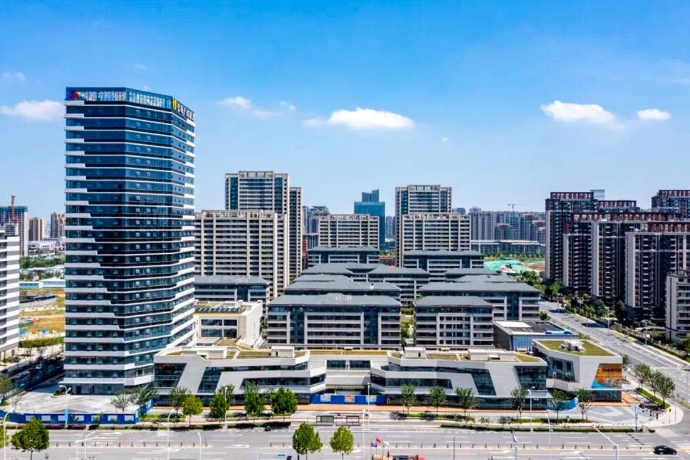
At the Hefei Jinpeng Center in China, Gain Solar supplied photovoltaic building materials for a curtain wall project covering approximately 1,050 square meters.
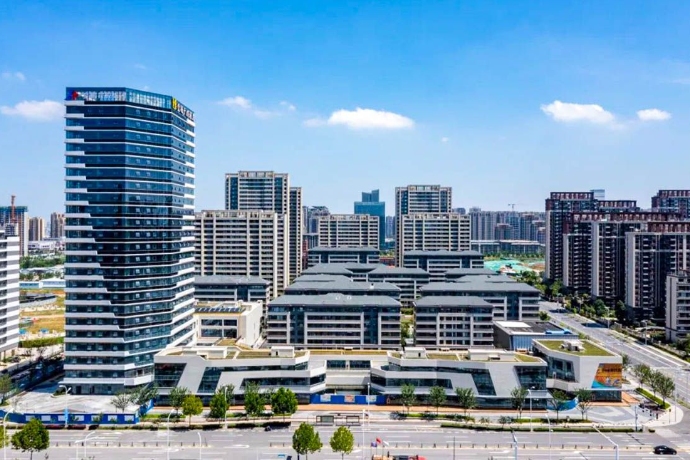
Hefei Jinpeng Center BIPV photovoltaic project
The installation includes 638 colored photovoltaic modules integrated into the building facade from the 6th to the 23rd floors, with panels positioned on east-, south-, and southeast-facing surfaces.
According to the project's published specifications, the system has an installed capacity of approximately 121 kW and an estimated annual generation of 100,000 kWh.
The project demonstrates how photovoltaic materials can be incorporated into a multi-story commercial facade without treating solar generation as a separate rooftop addition.
While these figures illustrate one practical application, they should not be treated as universal performance benchmarks. Energy output and investment returns vary considerably between buildings and locations.
The choice between solar facades and rooftop solar should begin with the building's actual conditions.
Rooftop solar is often the better starting point when:
1. The building has extensive, unobstructed roof space.
2. Maximizing electricity generation at a competitive cost is the primary objective.
3. The existing roof is structurally suitable and has sufficient remaining service life.
4. Architectural integration is not a major project requirement.
Solar facades deserve closer consideration when:
1. Usable roof space is limited relative to the building's electricity demand.
2. The project involves new construction or facade renovation.
3. Photovoltaic modules can replace conventional exterior materials.
4. Architectural appearance and sustainability are important design objectives.
5. Multiple facade orientations can contribute to on-site electricity generation.
For some developments, the strongest approach may be a combination of both systems.
Rooftop PV can provide high-yield generation, while solar facades expand the available solar collection area and contribute electricity during different daylight hours.
This combined approach should be assessed using project-specific energy simulations, construction costs, and lifecycle financial analysis rather than general performance assumptions.
Rooftop solar remains a practical and often economical option for commercial buildings with suitable roof space.
Solar facades offer a different type of value. Beyond electricity generation, they can make use of vertical surfaces, support architectural design, and potentially replace conventional building-envelope materials.
Recent research reinforces the importance of considering these functions together instead of judging BIPV solely by energy output.
For commercial building owners, developers, and architects, the question is not simply which solar technology produces more electricity. It is which solution makes the best use of available surfaces, construction budgets, and long-term operating requirements.
Gain Solar provides customized BIPV products for building facades, curtain walls, roofs, and other architectural applications. Project teams can explore Gain Solar's BIPV solutions to assess suitable options for new developments and renovation projects.
For project discussions, contact Gain Solar with your building location, facade or roof drawings, available installation area, and expected energy objectives.