Jul. 21, 2026
Solar roof tiles usually cost more than traditional rooftop solar panels, but they also replace part of the roof itself. In 2026, the most practical way to understand solar roof tiles cost is not to compare only the price per watt. Buyers should also calculate roofing materials, waterproofing, installation labor, inverters, wiring, permitting, optional battery storage, and whether the project is a new roof, a roof replacement, or a retrofit. As a general market reference, EnergySage reports that a 12 kW traditional solar panel system averages about $31,135 before incentives in 2026, while solar shingles can cost roughly 60% to 190% more than solar panels for the same power output. This means a comparable solar roof tile project can often move into the $50,000–$90,000+ range before local incentives, depending on roof size, active tile area, product type, and installation complexity.
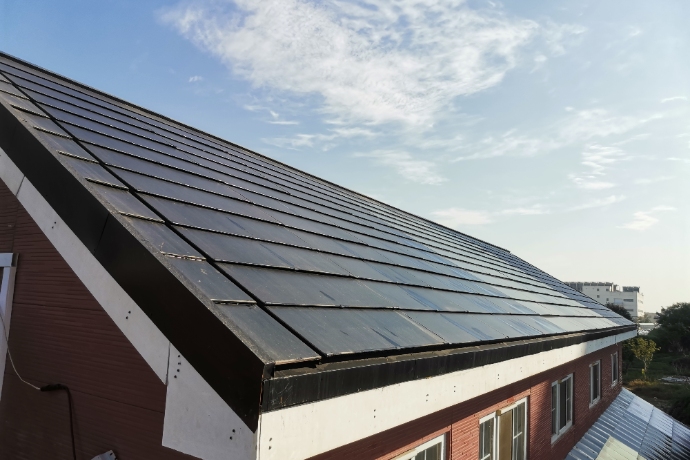
solar roof tiles
Solar roof tiles, also called solar shingles, are building-integrated photovoltaic products. Instead of placing framed solar panels above an existing roof, solar roof tiles are installed as part of the roof surface. They generate electricity while also serving as roofing materials.
This is why solar roof tiles price is usually higher than the price of standard solar panels. A traditional PV panel is mainly an electricity-generating product. A solar roof tile must perform two jobs at once: it must generate electricity and protect the house from rain, wind, heat, snow, and long-term weather exposure.
EnergySage explains that solar shingles are a type of building-integrated photovoltaic product because they integrate directly into the roof and create a lower-profile appearance than traditional panels. This makes them attractive for homeowners who want solar power without changing the visual design of the house.
The final solar roof tiles cost depends heavily on the home. A small, simple roof with good sun exposure and limited shading may be much less expensive than a large roof with multiple slopes, dormers, chimneys, skylights, and complex waterproofing details.
For a practical 2026 estimate, homeowners can use traditional rooftop solar as the baseline. EnergySage reports that solar systems average about $2.60 per watt before incentives in 2026, and a 12 kW system averages $31,135 before incentives. The U.S. Department of Energy also publishes solar PV cost benchmarks; its residential rooftop PV benchmark lists an 8 kW residential system at $3.15/Wdc modeled market price for 2024Q1, excluding energy storage.
Because solar roof tiles are usually priced above conventional panels, a homeowner should expect the solar roof tiles price to be higher than a normal rack-mounted PV system. If traditional panels are the lowest-cost route, solar roof tiles are the premium, design-integrated route. EnergySage notes that solar shingles can cost about 60% to 190% more than solar panels for the same output, mainly because they are more specialized, less widely available, and more complex to install.
Cost Item | How It Affects Solar Roof Tiles Cost |
Active solar tiles | These are the electricity-generating tiles and usually represent the most important part of the system cost. |
Inactive matching tiles | Some areas of the roof may need non-generating tiles to create a uniform appearance. These add roofing cost but not power output. |
Underlayment and waterproofing | Solar roof tiles must be integrated with drainage, flashing, and waterproof layers. |
Inverter or microinverter system | The system needs equipment to convert DC electricity into AC electricity for home use. |
Electrical wiring and safety equipment | Cable routing, junction boxes, rapid shutdown devices, and electrical upgrades may affect total price. |
Installation labor | Labor is often higher than standard panels because the project involves both roofing and solar electrical work. |
Permits and interconnection | Local permitting, utility approval, and inspection costs vary by region. |
Battery storage | A home battery can significantly increase the project budget but may improve backup power and self-consumption. |
The Department of Energy separates residential PV system cost into hardware and soft-cost categories, including modules, inverters, structural balance of system, electrical balance of system, fieldwork, office work, and other developer costs. This framework is useful for understanding why the final solar roof tiles cost is not simply the tile price multiplied by the system size.
Solar roof tiles must be tested as solar products and roofing products. They need electrical performance, mechanical strength, fire safety, wind resistance, water resistance, and long-term durability.
A traditional solar panel installer can mount panels above an existing roof. A solar roof tile project often requires closer coordination between roofers, electricians, solar designers, and inspectors. The installation has to protect the roof and meet electrical code at the same time.
EnergySage reports that traditional solar panels can produce more than 20 watts per square foot, while many solar shingles produce less than 16 watts per square foot. Lower power density means a roof may need more surface area to reach the same system capacity, which can affect both layout and price.
The broader solar PV market remains strong, which supports long-term demand for solar roof tiles and other BIPV products. The International Energy Agency states that solar PV is expected to account for almost 80% of global renewable power capacity growth between 2025 and 2030, driven by low costs, faster permitting, and broad social acceptance.
In the U.S. market, SEIA reported that the solar industry installed 7.8 GWdc of capacity in Q1 2026. Residential solar reached 1,179 MWdc in that quarter, up 6% year over year but down 15% quarter over quarter. SEIA also noted that Q1 residential volume was partly supported by projects started at the end of 2025 to capture the expiring Section 25D tax credit.
This matters for solar roof tiles price because incentives, policy changes, and financing conditions directly affect homeowner demand. The IRS states that the Residential Clean Energy Credit applied to qualified property installed from 2022 through December 31, 2025, and is not available for property placed in service after December 31, 2025. For 2026 buyers, local incentives, state programs, utility rebates, and third-party ownership models may become more important than the former federal homeowner credit.
Solar roof tiles are not the cheapest way to generate solar electricity. They make the most sense when the project has one or more of the following conditions.
If the roof is already old, damaged, or near the end of its service life, the homeowner may need to pay for a new roof anyway. In that situation, solar roof tiles can combine roofing and power generation in one project.
For new homes, architects and builders can plan the roof pitch, orientation, wiring paths, inverter location, and battery space from the beginning. This can make the installation cleaner and reduce some retrofit complications.
Aesthetic demand.
Some homeowners do not want visible solar panels because of design preferences, homeowner association rules, or neighborhood appearance requirements. Solar roof tiles provide a lower-profile alternative.
Premium residential development.
For villas, luxury homes, resorts, and high-end communities, the value of solar roof tiles is not only electricity savings. The product can also support modern design, sustainability positioning, and property differentiation.
Roof size is one of the biggest cost factors. A larger roof may require more inactive tiles, more underlayment, more flashing, and more labor, even if the active solar capacity is not much larger.
Roof complexity is another major factor. Simple gable roofs are usually easier to install than roofs with many valleys, hips, dormers, skylights, and chimneys. More roof details mean more cutting, waterproofing, and electrical planning.
Local labor cost also changes the final solar roof tiles price. Markets with higher roofing labor, stricter permitting, or fewer qualified installers tend to have higher total project costs.
System size matters as well. A larger solar tile system may have a lower cost per watt in some cases, but it still requires more product and labor. Homeowners should size the system based on electricity usage, roof area, sun exposure, and future needs such as EV charging or heat pumps.
Battery storage is another important variable. SEIA reported that 45% of new U.S. residential solar installations in the first three months of 2026 included a residential battery, showing that solar-plus-storage is becoming more common. However, adding storage can significantly increase upfront project cost.
A low solar roof tiles cost is not always the best measure of value. Buyers should compare the system across several dimensions: installed price, expected annual power generation, roof lifespan, warranty terms, maintenance access, product availability, installer experience, and local electricity rates.
Traditional panels usually win on cost per watt. Solar roof tiles compete in a different way. They offer a cleaner appearance, integrated roofing function, and better design compatibility for certain homes. For a homeowner who only wants the fastest payback, standard solar panels may be better. For a homeowner replacing a roof and prioritizing appearance, solar roof tiles may be worth the premium.
So, what do solar roof tiles cost in 2026? In most cases, they cost significantly more than traditional solar panels. A practical benchmark is to start with the 2026 traditional solar panel average of about $31,135 for a 12 kW system, then expect a substantial premium because solar roof tiles combine roofing materials, BIPV technology, waterproofing, electrical integration, and specialized labor. Based on current market references, many solar roof tile projects can reasonably fall in the $50,000–$90,000+ range before local incentives, although actual quotes can be lower or higher depending on the roof and product.
The best way to evaluate solar roof tiles cost is not to ask only, “What is the cheapest solar roof tiles price?” A better question is: “Does this project need both a new roof and a visually integrated solar system?” If the answer is yes, solar roof tiles can be a strong option. If the priority is maximum electricity generation at the lowest price per watt, traditional solar panels remain the more cost-effective choice.