Aug. 21, 2026
Lightweight BIPV modules are becoming one of the most important directions in building-integrated photovoltaics because they solve a practical problem that many solar projects face: not every roof, façade, or building envelope can support the weight, structure, and installation method of conventional glass solar panels. As solar moves from open fields and standard rooftops into façades, curved roofs, renovation projects, industrial buildings, public facilities, and architectural surfaces, module weight is no longer just a technical detail. It directly affects whether a BIPV system can be installed safely, beautifully, and economically.
Building-integrated photovoltaics, or BIPV, refers to solar products that are incorporated directly into building elements such as roofs, skylights, façades, balustrades, awnings, and windows. The U.S. Department of Energy describes BIPV as an emerging set of solar applications that replace conventional building materials with solar-generating materials in different parts of a structure. This dual function is what makes BIPV different from traditional rooftop solar. A BIPV product is not only expected to produce electricity; it must also work as part of the building envelope.
That is why lightweight design matters. In a traditional PV project, module weight is usually handled by racking systems, roof assessments, and standard installation methods. In a BIPV project, the solar module may become the roof surface, facade panel, shading element, or exterior cladding. If the module is too heavy, the building may need additional structural reinforcement, which increases cost, design complexity, installation time, and approval difficulty. Lightweight BIPV modules make solar integration more flexible, especially for buildings that were not originally designed to carry solar products.
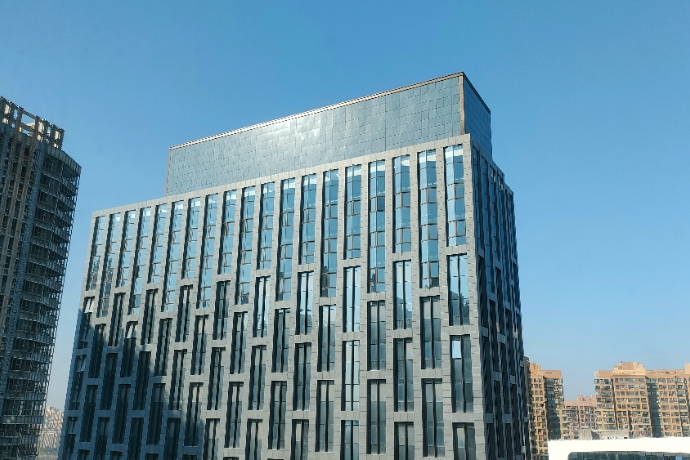
A lightweight BIPV module is usually designed to reduce weight through material selection, structural design, or manufacturing method. Instead of relying on thick glass-glass structures, lightweight modules may use flexible substrates, composite back sheets, thin glass, polymer materials, metal-integrated structures, or perovskite solar layers on foil.
The goal is not only to make the module easier to carry. The real value is to reduce dead load on the building envelope while maintaining enough mechanical strength, weather resistance, fire safety, electrical performance, and long-term durability.
In BIPV, weight cannot be reduced carelessly. A module installed on a building must still meet the requirements of both photovoltaic products and construction materials. IEC 63092-1:2020 applies to photovoltaic modules used as building products and focuses on module properties relevant to basic building requirements as well as electro-technical requirements. This means lightweight BIPV modules must be evaluated not only by watts, but also by safety, compatibility, installation method, and building function.
Many buildings have solar potential but limited structural capacity. This is especially common in older warehouses, factories, commercial roofs, renovation projects, and lightweight metal roofs. A standard glass PV module plus mounting structure can create additional load that the existing roof may not be designed to handle. In some cases, the solar system may be technically possible but economically unattractive because structural reinforcement becomes too expensive.
The U.S. Department of Energy notes that certain commercial buildings may have roof weight limitations that rule out rooftop solar panels, while high-rise and multi-story buildings often have much more exterior wall area than roof area. This is exactly where lightweight BIPV modules become valuable. They can open solar opportunities on surfaces that conventional PV systems may not be able to use.
A 2026 industry report from pv magazine also highlighted this issue, noting that lightweight PV modules could unlock more than 85 GW of untapped rooftop potential in Europe. The report explained that lightweight modules can often be adhered directly to roof surfaces, reducing or eliminating the need for heavy mounting structures. For BIPV projects, this is highly relevant because simplified installation and lower structural load can make previously unsuitable buildings available for solar integration.
One of the strongest applications for lightweight BIPV modules is building renovation. Existing buildings often have limited design flexibility. Their roof structure, façade material, waterproofing system, and load-bearing capacity may already be fixed. Retrofitting heavy solar systems onto these buildings can be difficult, especially when owners want to avoid major construction work.
Lightweight BIPV modules provide a more practical path. They can be used on low-load roofs, metal roofs, older buildings, and façade surfaces where conventional panels are too heavy or visually unsuitable. For industrial buildings, this can turn large roof areas into energy-generating assets without a complete roof reconstruction. For public buildings or commercial spaces, lightweight solar façades can improve energy performance while preserving architectural appearance.
In 2025, researchers in Switzerland and Austria demonstrated glass-free colored PV modules with a weight below 6 kg/m², targeting older buildings with weak roof structures, low-load façades, warehouses, and roof retrofit applications. Although this is still a research-oriented example, it shows the direction of the market: BIPV must become lighter, more adaptable, and more compatible with real building conditions.
Solar façades are one of the most promising BIPV applications, especially in cities where roof space is limited. High-rise buildings, office towers, shopping centers, hotels, schools, and public facilities often have large vertical surfaces that can be used for electricity generation. However, façade integration places strict requirements on weight, wind load, fixing systems, fire safety, maintenance, and visual design.
A heavy solar façade panel can increase the burden on the curtain wall or cladding support system. It may require stronger brackets, thicker substructures, more complex anchoring, and additional engineering review. A lightweight BIPV façade module can reduce these constraints and make the system easier to integrate into both new construction and renovation projects.
Recent research also shows why façades matter for urban solar deployment. A 2025 study on façade PV assessment pointed out that BIPV façades are a promising pathway for urban decarbonization, especially where roof areas are insufficient and ground-mounted systems are not feasible. Lightweight BIPV modules can help make this potential easier to realize because they reduce structural penalties and give architects more design freedom.
Perovskite solar technology is one of the most watched areas in lightweight BIPV. Compared with conventional crystalline silicon modules, perovskite solar cells can potentially be made thinner, lighter, semi-transparent, colorful, and flexible. These features match many of the requirements of building integration.
In 2026, TNO announced that researchers successfully applied a perovskite solar module on foil to a roof tile, moving from small laboratory test cells to flexible modules and finally to a practical solar roof tile demonstrator. TNO also launched Perovion Technologies, a spin-off focused on industrializing a new generation of lightweight and flexible solar cells.
The European LUMINOSITY project also highlights the same direction. It focuses on lightweight, flexible perovskite solar modules that can conform to curved surfaces, and it reported that TNO applied a flexible perovskite solar module onto a curved composite roof tile with 12.4% efficiency.
These developments do not mean perovskite BIPV has already replaced silicon-based products. Durability, encapsulation, moisture protection, large-scale production, bankability, and long-term warranties still need further improvement. However, the technology is important because it points to a future where BIPV modules are not limited to flat, heavy, rigid panels. They can become lighter solar skins for roofs, façades, curved tiles, shading systems, and semi-transparent surfaces.
Installation is one of the hidden cost drivers in BIPV projects. A system that looks elegant in a product brochure may become expensive if it requires heavy lifting equipment, complex mounting, additional roof reinforcement, or long installation time.
Lightweight BIPV modules can reduce these barriers in several ways:
Integration Challenge | How Lightweight BIPV Helps |
Limited roof load capacity | Reduces additional dead load and may avoid structural reinforcement |
Complex façade installation | Makes handling, lifting, and fixing easier |
Older building renovation | Expands the use of solar on roofs and façades not designed for heavy PV |
Curved or irregular surfaces | Flexible modules can better adapt to non-flat building elements |
Installation labor | Lighter products can simplify transportation, positioning, and on-site work |
Architectural design | Enables thinner, cleaner, and less visually intrusive solar surfaces |
This does not mean lightweight BIPV modules are always cheaper at the product level. In fact, specialized lightweight modules can cost more per watt than standard solar panels because they use advanced materials and smaller production volumes. But the full project cost may be more competitive when lower structural work, simpler installation, faster deployment, and better building compatibility are considered.
The broader solar market continues to support BIPV growth. IRENA reported that global renewable capacity additions exceeded 690 GW in 2025, with solar PV contributing more than 500 GW. It also reported that solar PV’s global weighted-average LCOE remained at USD 44/MWh in 2025, showing that solar remains one of the most competitive renewable power technologies.
Fraunhofer ISE’s Photovoltaics Report, updated in July 2026, also shows long-term cost and efficiency progress in the PV industry, noting that PV module prices fall by an average of about 26.7% for every doubling of cumulative production and that commercial silicon module efficiency has improved significantly over the past decade.
For BIPV, this creates a strong opportunity. As conventional PV becomes more mature and cost-competitive, the next stage is not only about installing more panels on open land or standard roofs. It is about making solar part of buildings themselves. Lightweight BIPV modules are important because they make building integration more practical, especially in dense urban areas, renovation markets, and architecture-driven projects.
Lightweight BIPV modules are especially suitable for buildings where conventional solar is limited by weight, appearance, or installation complexity.
They are a strong fit for industrial and commercial roofs with limited structural capacity. Many warehouses, logistics centers, factories, and older commercial buildings have large roof areas but cannot easily support standard PV systems with heavy mounting structures. Lightweight modules can help turn these roofs into useful energy surfaces.
They are also suitable for façade renovation. Existing buildings can use lightweight solar cladding or solar façade modules to improve energy performance without completely rebuilding the exterior envelope.
For residential buildings, lightweight BIPV can support solar roof tiles, curved roof surfaces, hidden solar panels, and design-sensitive projects. This is useful for villas, modern homes, historic-style buildings, and communities where visible rack-mounted panels are not preferred.
Lightweight BIPV is also relevant for transport-related buildings, schools, public facilities, resorts, and architectural projects where solar must blend into the design rather than appear as a separate technical add-on.
Before selecting lightweight BIPV modules, buyers should look beyond product weight and rated power. A good lightweight BIPV product should be evaluated across both solar and building requirements.
Important factors include mechanical load rating, fire classification, wind resistance, waterproofing design, hail resistance, corrosion protection, UV aging, thermal performance, cable routing, maintainability, and compatibility with the roof or façade system. IEA PVPS notes that wider BIPV adoption has been limited by lack of technical guidance and standardization, and its Task 15 guidebook was developed to consolidate best practices and support successful BIPV implementation.
For real projects, buyers should also confirm whether the product is designed for roof integration, façade integration, or another specific application. A lightweight module for a metal roof is not automatically suitable for a curtain wall. A flexible solar tile is not automatically suitable for every roofing system. The installation method, ventilation, drainage, fixing structure, electrical connection, and maintenance plan must all match the building.
Lightweight BIPV modules matter because they help solve one of the biggest barriers in building-integrated solar: the gap between solar technology and real building conditions. Buildings are not uniform platforms. They have structural limits, design requirements, waterproofing systems, safety codes, and long service-life expectations. Heavy, rigid solar panels cannot address every scenario.
By reducing structural load, simplifying installation, supporting roof and façade retrofits, and enabling flexible architectural design, lightweight BIPV modules make solar integration more practical. They are especially valuable for older buildings, low-load roofs, industrial facilities, solar façades, curved surfaces, and design-sensitive projects.
As the solar market continues to expand and BIPV technology matures, lightweight modules will play a larger role in turning buildings from passive energy consumers into active power-generating surfaces. For architects, developers, homeowners, and industrial building owners, the question is no longer only how much electricity a solar module can produce. It is whether that module can truly become part of the building.